
Testing Plug-In Solar in the UK: AP Systems EZ1 vs. Hoymiles HiFlow 800W
The UK is finally embracing "plug-in" balcony solar. Following the introduction of BS 7671 Amendment 4 and recent government announcements, sub-800W plug-and-play kits are moving from a legal grey area straight into mainstream retail.
But what is it actually like to buy, set up, and run these systems?
Over the last few weeks, I’ve been hands-on testing two of the biggest microinverters on the market: the AP Systems EZ1 and the Hoymiles HiFlow HF-800-WB. Here is what the glossy marketing brochures don't tell you about making these systems work in the UK.
The Hardware Face-Off: Output, Cables, Plugs, and Waterproofing
Both the AP Systems and Hoymiles units use a standard setup: solar panels feed DC power into a microinverter, which outputs AC power through a cable with a proprietary waterproof connector on one end and a standard mains plug on the other.
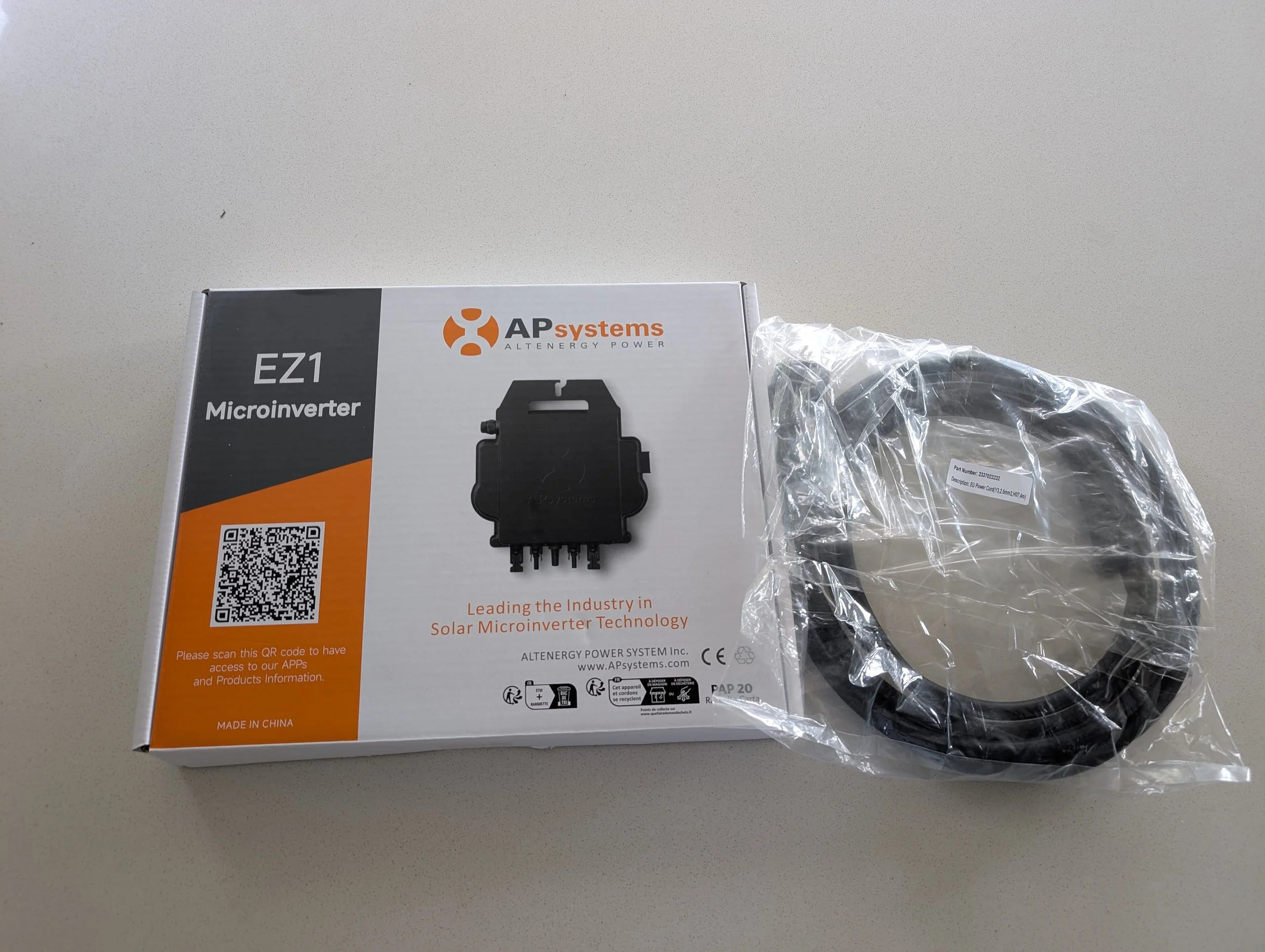
1. AP Systems EZ1
The AP Systems cable arrived with a standard European plug. To get this safely into an outdoor UK socket, I had to cut off the Euro plug entirely and wire a UK 3-pin plug in its place.
While I had to do this manually for my test unit, I have been assured that when these products officially launch for general retail in the UK (approximately August), they will ship with a native UK plug. The AP Systems unit is a 2 x MPPT unit with a maximum 800W output.
What does this mean for the average user?
2 x MPPT (Maximum Power Point Tracking): This means the microinverter treats your two solar panels completely independently. If one panel gets covered in shade by a tree or a cloud, the other panel keeps producing power at full capacity. It also means you can mount your panels facing different directions (e.g., one Southeast and one Southwest) to catch both morning and afternoon sun without them bottlenecking each other.
Maximum 800W Output: This 800W figure is critical because it aligns perfectly with the statutory cap officially introduced under BS 7671 Amendment 4. To guarantee absolute safety across diverse British housing stock, the government has capped plug-in solar kits at an 800W AC limit. This mirrors the standard across Europe, where 800W is the legal benchmark for plug-and-play generation (although European regulators are actively looking into increasing this limit to allow even higher output plug-in systems in the future).
For now, by keeping the UK limit to roughly 3.5 Amps of generation, the rules ensure there is virtually zero risk of overheating your property’s internal ring main wiring, even if the system generates at maximum capacity all day. It’s the highest legal threshold allowed for true DIY installation without needing a dedicated, hardwired circuit installed by an electrician, and it will easily offset your household’s baseline passive load (like fridges, routers, and standby tech).
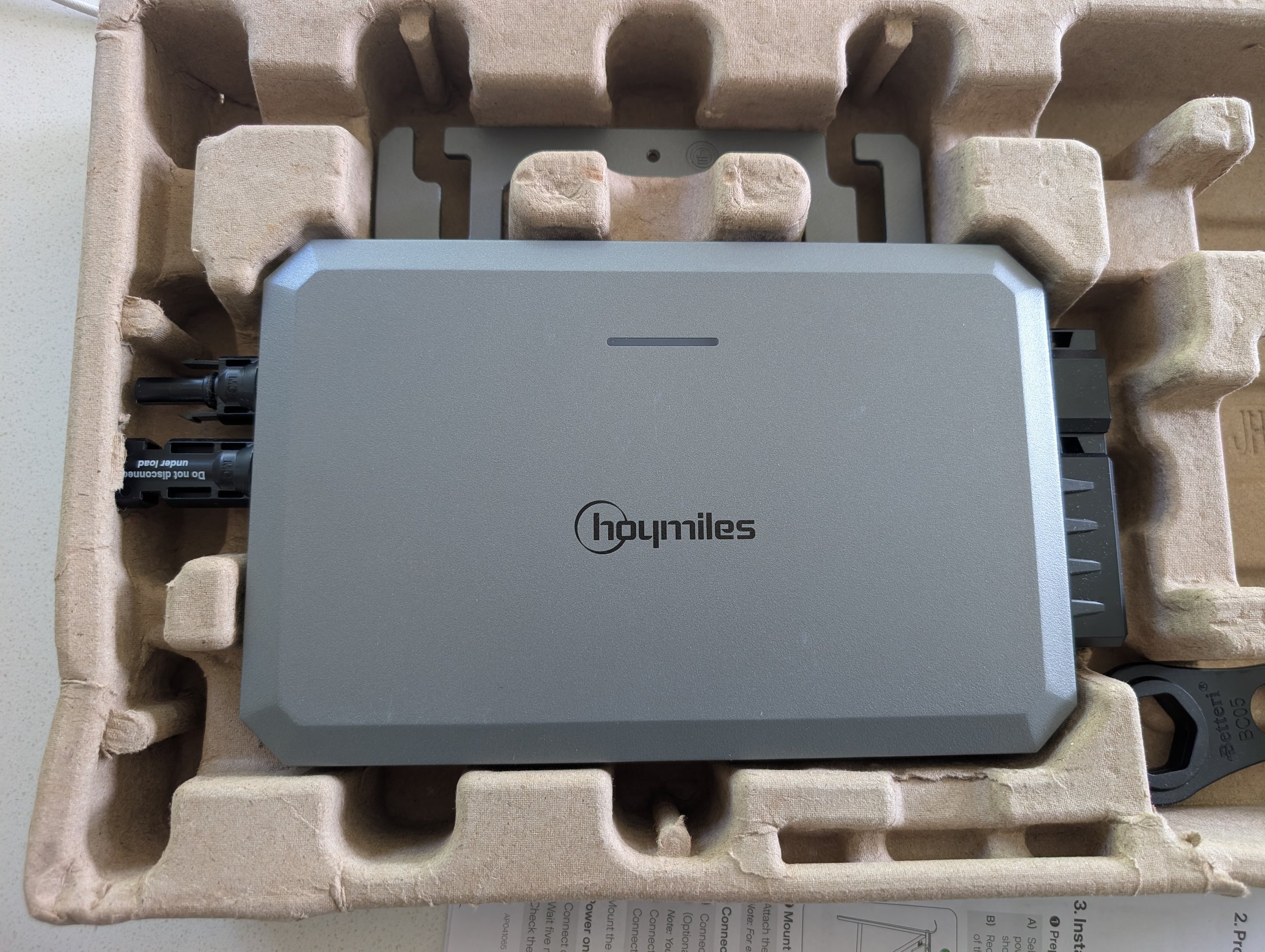
2. Hoymiles HiFlow HF-800-WB
Hoymiles gets points for including a UK 3-pin adapter right out of the box so you can use it immediately. However, during testing, I hit a snag: this adapter will not fit inside a standard weather-tight outdoor plug enclosure. Just like AP Systems, Hoymiles has confirmed that their official UK retail cables will eventually come with a native 3-pin plug. Until those launch in August.
The 1 x MPPT Reality Check
Unlike the AP Systems unit, the Hoymiles HF-800-WB model I tested only features 1 x MPPT track with a single input. I was initially told this was a standard two-panel microinverter, but that is incorrect for typical setups.
Because it is a single MPPT tracker designed to have panels wired in series, connecting two standard modern solar panels will cause an over-voltage fault as soon as they hit direct sunlight.
While it is a very good unit when running just 1 panel, it presents a practical problem: it is an 800W microinverter, but you cannot easily buy a single 800W solar panel. As a result, you will never actually hit the full 800W output capacity of the unit.
Note: I have contacted Hoymiles regarding this issue to see if my unit is faulty or if this is by design for this specific model line. When I get a response, I will update this post. (Hoymiles also produces a "HiFlow Pro" dual-MPPT version, which I intend to test in the future to see if it resolves this).
App vs. App: The Software Experience
Both systems require you to use their proprietary smartphone apps for tracking generation.
The Hoymiles App: Visually, this is the slicker of the two. It looks polished and professional, sharing the exact same layout and high-end design aesthetic as Hoymiles full-sized home inverter and battery applications.
The AP Systems App: It lacks the fancy graphics and "nice pictures" found in the Hoymiles app, but it is just as functional. It gives you almost the exact same granular data, with one minor exception: the AP Systems app doesn't explicitly display the conversion losses occurring inside the microinverter itself.
Resolving the Grid Conflict & The Battery Test
A massive part of any solar installation—even plug-in kits—is how it interacts with your local Distribution Network Operator (DNO).
During my testing window, our local DNO was performing major grid upgrades in our area. To keep local properties powered during the works, they hooked up a massive temporary generator to our local cluster. Traditional grid-tied solar looks for a stable 50Hz grid signal to sync with, but pushing solar power back against a temporary generator can cause voltage spikes that trip the generator out, leaving the whole neighbourhood in the dark.
To ensure we could still utilize our existing on-roof solar and test our plug-in kits safely without knocking out the local backup generator, we had to isolate the house from the grid. This allowed us to test a fundamental safety feature built into both the Hoymiles and AP Systems microinverters: Anti-Islanding.
How it works: Microinverters must detect a live grid frequency to operate. If you unplug them or disconnect the main grid supply, they instantly shut down generation within milliseconds so they don't back-feed live electricity down dead lines (protecting grid engineers).
The Test Condition: Because we isolated the property, the plug-in kits could only generate power when safely synced to our home's internal, isolated microgrid network and while we had some storage space available in our home battery system.
The Result: The moment our home battery became completely full, the plug-in kits immediately turned themselves off. It proved flawlessly that when there is nowhere left for the energy to go, both systems safely and automatically isolate themselves under grid stress.
Final Thoughts
Both of these microinverters are exceptionally well-built and handle grid variations incredibly well. I would happily permanently install either of these products at my own home.
With the two specific units I have on test, there is a slight performance edge with the AP Systems unit due to its true dual-MPPT capability (though this may be different with Hoymiles' dual-MPPT model). As it stands, the AP Systems unit is slightly more expensive than the Hoymiles unit I tested.
Looking forward, both systems will eventually be available with compatible plug-and-play battery storage options, though keep in mind these modular battery additions will be limited to a maximum 2.5kW output.
Looking to Buy?
In August, we will officially be offering both of these systems to our customers, fully equipped with native, UK-ready plugs.
Should you wish to get a quotation or discuss adding plug-in solar to your property, please get in touch with us today!